
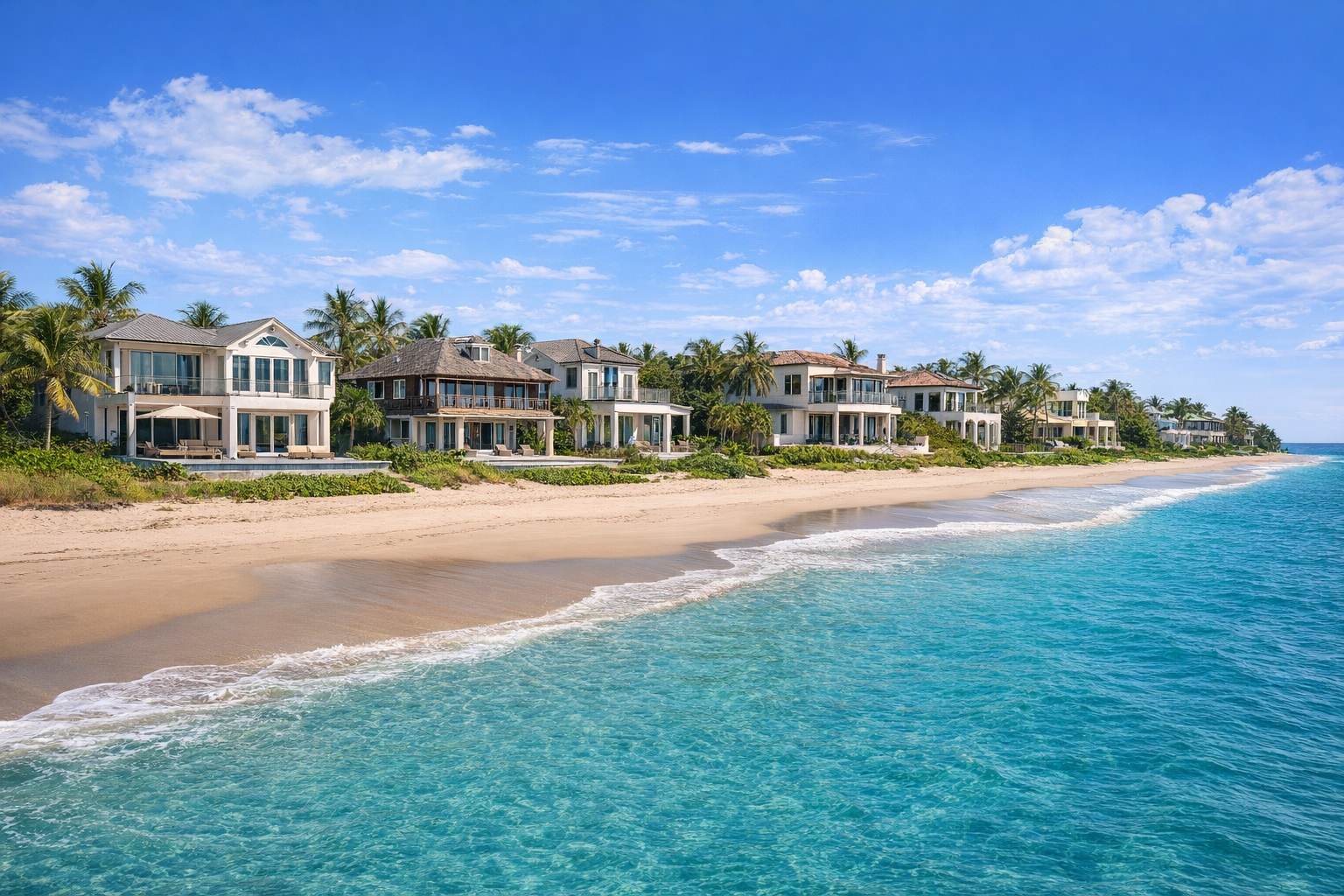
Coastal property markets have always moved to their own rhythm. While city apartments track employment data and interest rate cycles in fairly predictable ways, beachfront homes respond to a broader and more complex set of forces. In 2026, those forces are pulling in different directions, creating opportunities for some buyers and headaches for others.
The Remote Work Effect
The shift to remote and hybrid working, which began in earnest during the pandemic, hasn't reversed. If anything, it's solidified. Companies that once demanded five days in the office now accept that talent will go where lifestyle beckons. For coastal markets, this has been transformative. Towns that previously relied on summer tourism now sustain year-round populations of knowledge workers.
Cornwall, Portugal's Silver Coast, and parts of Croatia have all seen double-digit price increases since 2021. According to Knight Frank's coastal property research, premium waterfront locations across Europe have appreciated by an average of 8.3 percent annually over the past three years, outpacing urban markets by a comfortable margin.
Interest Rates and Affordability
Higher borrowing costs have cooled some of the speculative frenzy that marked 2021 and 2022. Buyers who need mortgages are more price-sensitive now, which has slowed transaction volumes in mid-range coastal markets. But at the upper end — properties above $1.5 million — cash buyers dominate, and they're less affected by rate movements.
This has created a two-speed market. Entry-level beachfront homes in places like Turkey's Aegean coast or Bulgaria's Black Sea resorts have seen price corrections of 5 to 10 percent. Meanwhile, prime locations in the Balearics, the French Riviera, and Bali's Bukit Peninsula continue to climb. The gap between affordable and aspirational coastal property is widening.
Climate Risk Is Now Priced In
Insurance companies and mortgage lenders have become far more sophisticated about climate risk modelling. Properties in flood zones, areas prone to coastal erosion, or regions with increasing hurricane frequency are facing higher insurance premiums and, in some cases, reduced mortgage availability. This is genuinely new. Five years ago, lenders mostly ignored these risks. Now they're central to underwriting decisions.
Parts of Florida's Gulf Coast, low-lying areas of the Maldives, and sections of the UK's East Anglian coast have all experienced measurable price impacts. Buyers are starting to factor in not just today's risk but projected risk over a 25-year mortgage term. Properties on higher ground with solid geology are quietly becoming more valuable relative to their exposed neighbours.
Supply Constraints and Regulation
Coastal development is more tightly regulated than ever. Environmental protections, heritage designations, and community opposition to overdevelopment have all conspired to limit new supply. In Spain, Greece, and Thailand, obtaining planning permission for new beachfront construction has become significantly harder over the past decade.
Limited supply and growing demand creates a familiar equation. The properties that already exist in premium locations become more valuable simply because there won't be many more like them. This scarcity premium is perhaps the most durable driver of coastal property prices — and it's unlikely to change anytime soon.