
Buying a beach house is one of those decisions that's driven as much by emotion as by logic. The vision is compelling: morning coffee with an ocean view, barefoot walks at sunset, weekends that actually feel like holidays. What often catches new owners off guard, however, is the relentless accumulation of costs that don't appear on the estate agent's listing sheet.
Insurance Premiums That Keep Climbing
If your beach house sits anywhere near a flood zone, storm path, or erosion-prone coastline, insurance will be your most significant hidden cost. In parts of Florida, annual premiums for coastal properties have risen by 40 to 60 percent since 2022. Some insurers have withdrawn from high-risk coastal markets entirely, leaving owners scrambling for coverage through state-backed schemes that offer less protection at higher prices.
Even in relatively low-risk areas, coastal properties attract higher premiums than their inland equivalents. Expect to pay 2 to 3 times more for comprehensive coverage on a beachfront home compared to a similar property 10 kilometres inland. And that gap is growing as the broader real estate investment literature increasingly factors climate risk into property valuations.
Salt Air Does Damage You Won't Expect
Salt is corrosive. That seems obvious in theory, but the practical implications surprise many first-time coastal homeowners. Metal fixtures — door handles, railings, window frames, outdoor lighting — degrade far faster than they would inland. Stainless steel isn't truly stainless when it's exposed to sea spray. Expect to replace exterior metalwork every 5 to 8 years rather than the 15 to 20 years you'd get elsewhere.
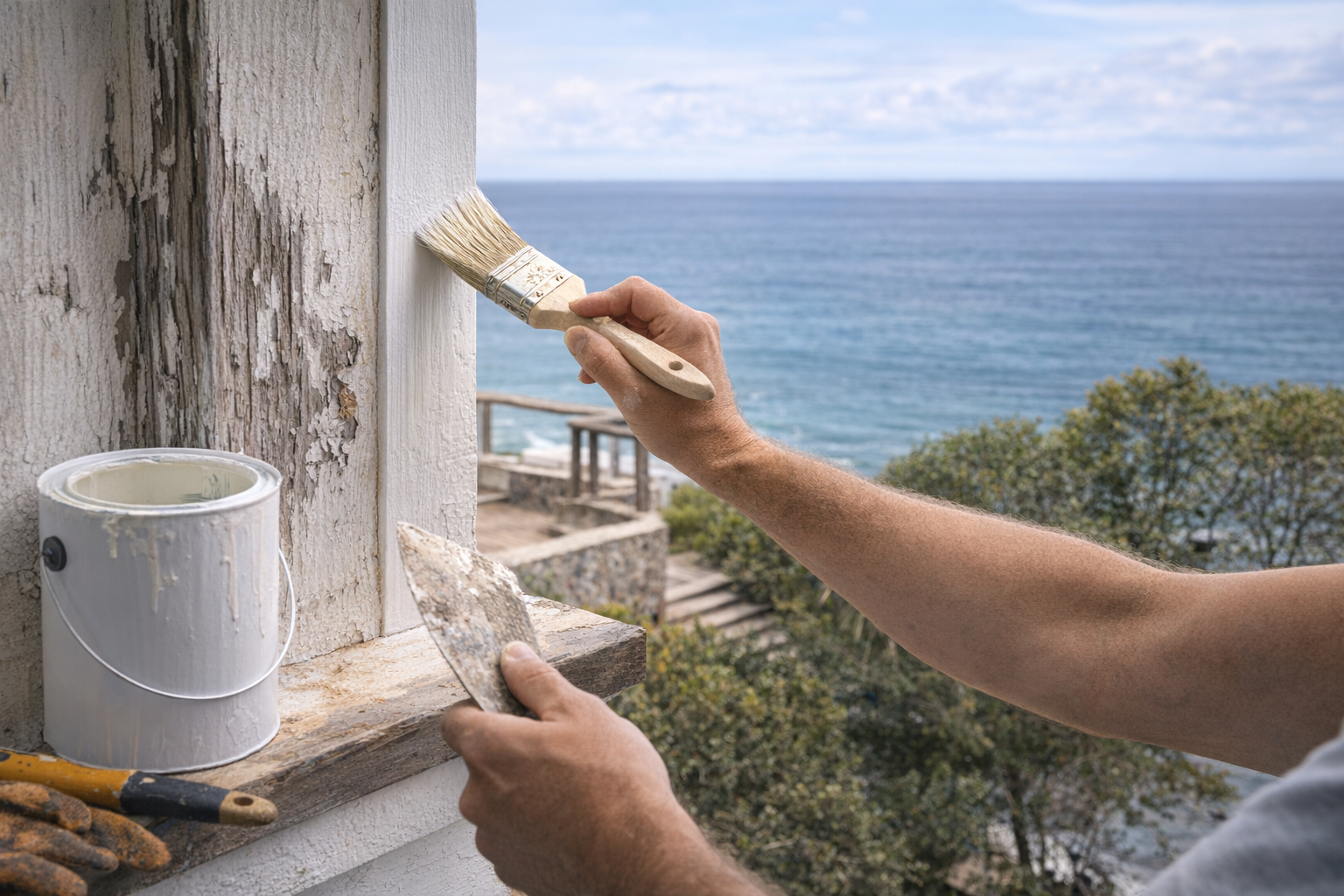
Exterior paint needs refreshing every 3 to 4 years. Wooden decking requires annual treatment. Air conditioning units, which work harder in humid coastal climates, have shorter lifespans. A reasonable maintenance budget for a mid-sized beachfront property is 2 to 3 percent of the property's value annually — roughly double the standard rule of thumb for residential properties.
Property Management and Vacancy
Many beach house owners don't live in their property full-time. That creates a management problem. Someone needs to check on the house after storms, manage cleaners, oversee maintenance, and handle tenant turnover if you're renting the property out. Professional property managers typically charge 15 to 25 percent of rental income, or a flat monthly fee ranging from $200 to $600 depending on the market.
Vacancy is another hidden drain. Even popular beach destinations have off-seasons. A villa in Bali might achieve 75 percent occupancy during high season but drop to 30 percent between October and March. On the Mediterranean, many properties sit empty from November through April. Those months still incur costs: utilities, security, garden maintenance, and loan repayments don't pause because the tourists have gone home.
Taxes, Fees, and Regulatory Surprises
Foreign ownership restrictions, capital gains taxes, and local property taxes vary enormously between jurisdictions. In some countries, annual property taxes on beachfront homes are trivial. In others — particularly the US, UK, and Australia — they represent a substantial ongoing commitment. Short-term rental regulations have also tightened significantly in many coastal communities, with licensing requirements, occupancy limits, and tourism taxes adding layers of cost and bureaucracy.
None of these costs should dissuade you from buying a beach house if you genuinely want one. But going in with realistic expectations is essential. The purchase price is just the beginning. The ongoing costs are where the real financial picture takes shape, and underestimating them is the most common mistake new coastal property owners make.