
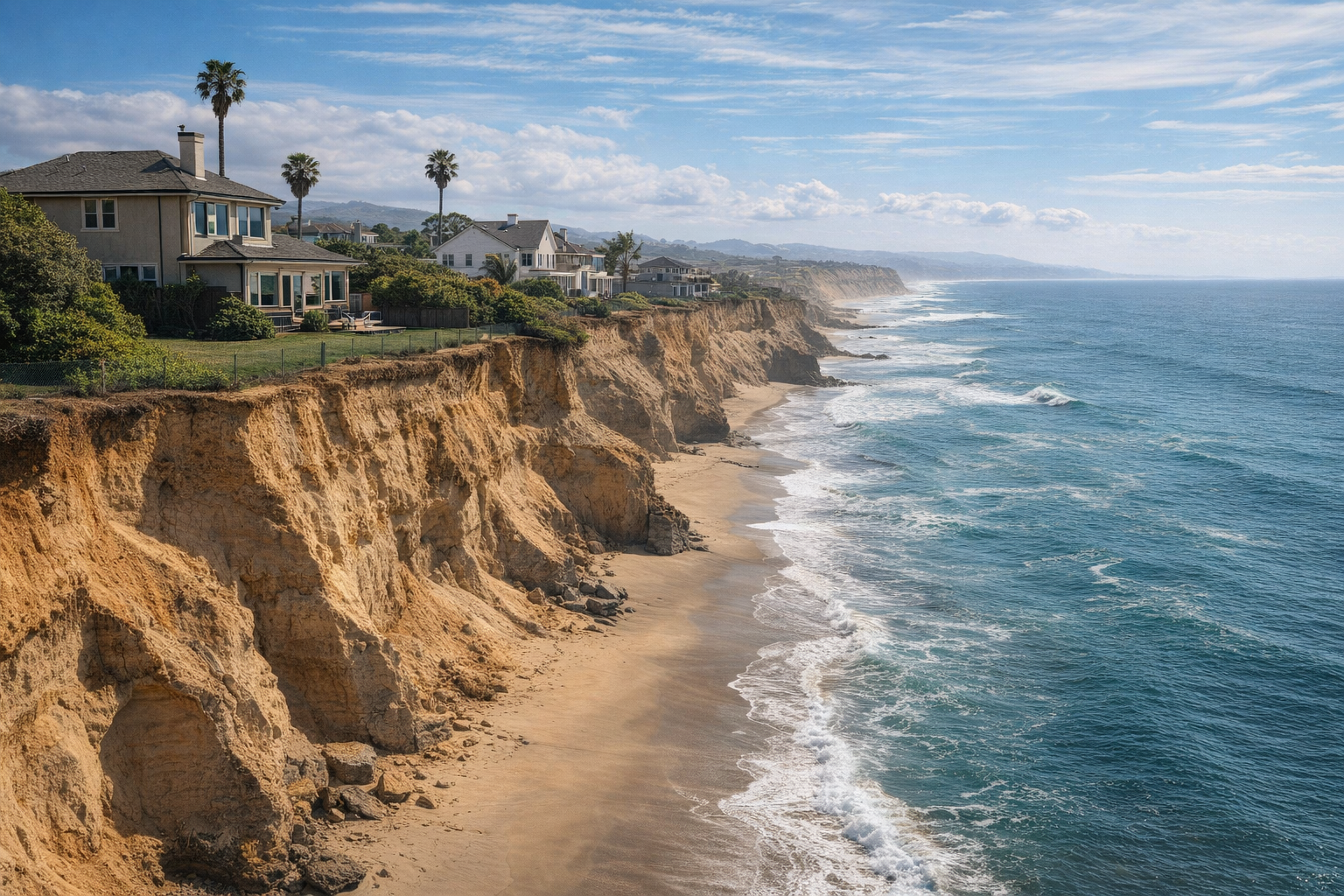
Coastal erosion isn't new. Shorelines have been retreating and advancing for millennia, shaped by tides, storms, and geological processes that operate on timescales most of us never think about. What is new is the pace. Accelerating sea level rise, more intense storm events, and altered sediment transport patterns have combined to make erosion a pressing concern for anyone considering buying property near the coast.
Understanding the Scale of the Problem
In England alone, approximately 113,000 properties currently sit in areas identified as at risk of coastal erosion over the next century. The numbers are even more dramatic in the United States, where the National Oceanic and Atmospheric Administration estimates that roughly 40 percent of the US population lives in coastal counties. Not all of those homes face imminent risk, but the direction of travel is clear.
Erosion rates vary enormously by location. Soft clay cliffs in East Anglia can lose 1 to 2 metres per year. Rocky granite coastlines in Cornwall barely shift at all over decades. Sandy shorelines in the Carolinas or Queensland fall somewhere in between, with erosion accelerating notably during storm seasons. The crucial point for buyers is that erosion is highly localised — a property 500 metres down the coast might face completely different risk levels than its neighbour.
The Financial Implications
Mortgage lenders are increasingly reluctant to finance properties in high-erosion zones. If a surveyor flags significant erosion risk, some lenders will decline the application outright. Others will impose shorter mortgage terms, reasoning that the property's useful life may not extend to the standard 25 or 30 years. This directly affects what buyers can afford and, consequently, what sellers can charge.
Insurance is another battleground. Standard home insurance policies rarely cover erosion damage — it's considered a gradual process rather than a sudden event. Specialist policies exist but they're expensive and often come with significant exclusions. RICS recommends that buyers commission a full coastal risk assessment before purchasing any property within 500 metres of an eroding shoreline, and it's advice worth following regardless of how confident the estate agent seems.
Due Diligence for Buyers
Before making an offer on a coastal property, request the local authority's Shoreline Management Plan. These documents, available for most UK coastlines and their equivalents in many other countries, categorise stretches of coast according to the planned response: hold the line, managed realignment, advance the line, or no active intervention. That last category is the one to watch. "No active intervention" means the government has decided the cost of defending that stretch of coast isn't justified by the assets at risk.
Commission an independent survey from a geotechnical engineer, not just a standard building surveyor. They'll assess cliff stability, drainage patterns, and projected erosion rates based on current data rather than historical averages. It costs more — typically $1,500 to $3,000 — but the information can save you from a catastrophic purchase decision.
It's Not All Bad News
Erosion risk doesn't automatically make a coastal property a bad investment. Properties on stable geology, behind well-maintained sea defences, or on elevated ground above the flood plain can still represent excellent value. The key is understanding the specific risk profile of the exact property you're considering, not relying on generalisations about the region.
Some buyers even see opportunity in erosion risk. Properties in affected areas trade at discounts of 10 to 30 percent, and if you're buying for lifestyle rather than investment — with a shorter time horizon and no mortgage to worry about — those discounts can be compelling. The beach isn't going anywhere in the next 10 years, even if the cliff edge is closer than it used to be.